
Every outdoor plaque has to survive the same enemies: sun, rain, frost, salt air, lawn mowers and time. The metal you choose decides whether the plaque still reads clearly in thirty years or needs replacing in five. This guide compares the three metals most often offered for outdoor plaques in the USA, cast bronze, aluminum and stainless steel, on durability, looks, maintenance, lettering options and cost, so you can pick the right one for a memorial, a dedication, a historical marker or a sign.
See the price of a cast bronze plaque in minutes
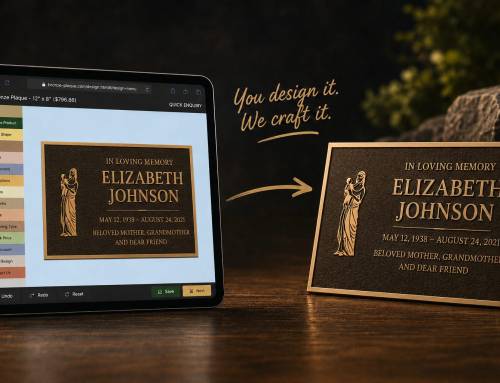
Set the size, add your wording and emblem, and our online designer shows the price for solid cast bronze as you work. A free proof is checked before anything is cast, and shipping is included.
Explore: bronze plaque prices · cast vs engraved bronze · bronze vs granite
The short answer
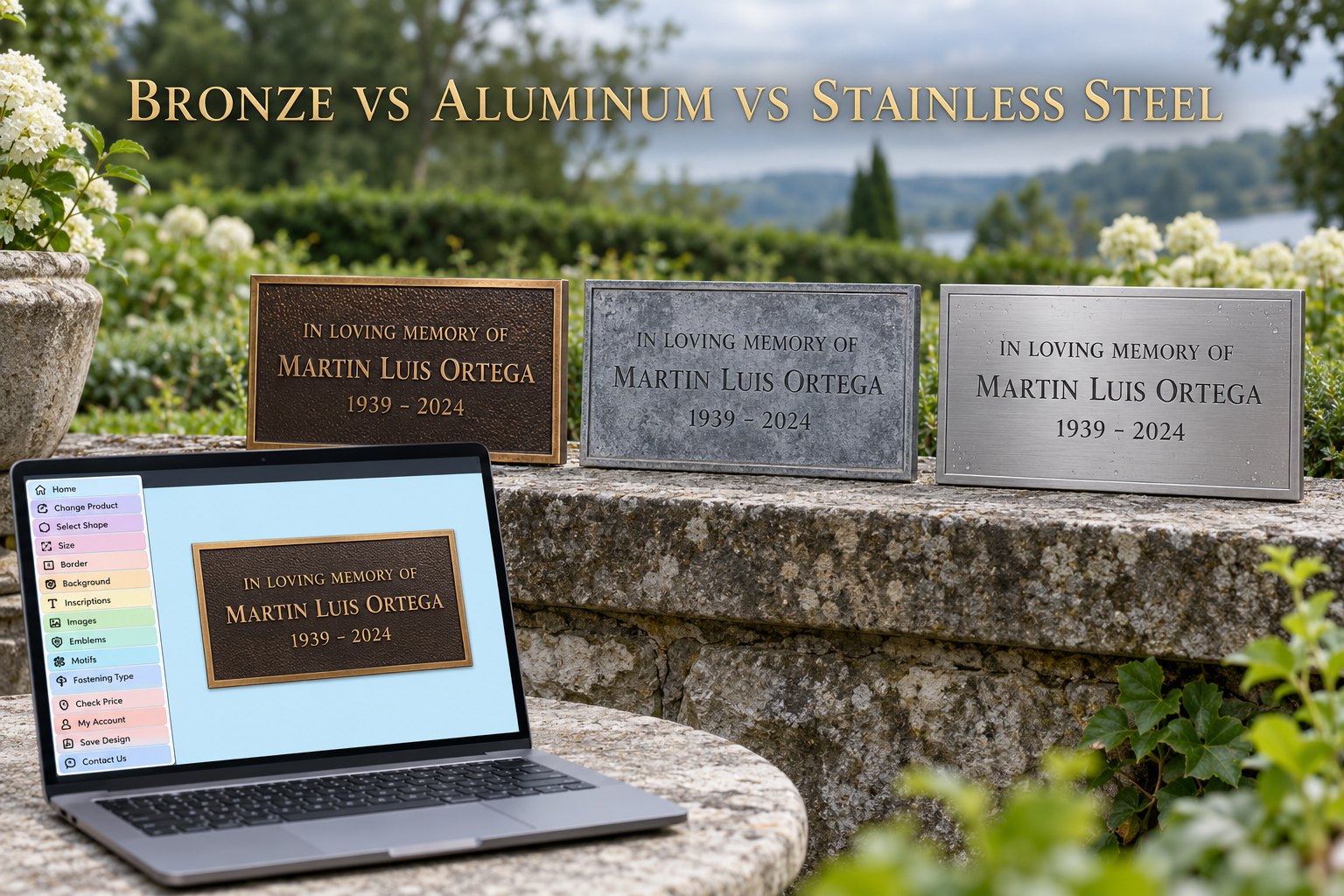
Cast bronze lasts the longest outdoors, needs the least care and looks the most dignified, which is why cemeteries, parks, universities and historical societies specify it. Aluminum is the budget choice for signs and temporary markers: light, cheap and fine for a few years, but it fades, dents and cannot carry raised lettering with the same depth. Stainless steel suits modern architecture and coastal sites where a bright, clean look is wanted, but it shows fingerprints and water marks, and most stainless plaques are engraved or etched rather than cast. If the plaque is a memorial or a dedication meant to outlast the people who placed it, choose bronze.
Side by side
| Cast bronze | Aluminum | Stainless steel | |
|---|---|---|---|
| How it is made | Molten bronze poured into a sand mold; letters, borders and emblems are part of the solid casting, about a quarter inch thick | Cast aluminum for raised letter plaques, or thin printed and coated sheet for signs | Flat sheet, usually 1/8 inch or less, with letters laser etched, engraved or printed |
| Outdoor life | Generations. Darkens to a stable brown patina; the raised letters stay bright and readable | 5 to 15 years for coated sheet before fading and chalking; cast aluminum longer but the finish wears | Decades for the metal itself, but etched or printed lettering can lose contrast and the surface can tea stain near the sea |
| Weather and salt | Does not rust. Salt air slows the patina slightly and nothing more | Does not rust, but pits and chalks; coatings peel at the edges | Marine grade resists rust; lower grades spot and streak in salt air |
| Look | Warm metallic tone, deep raised lettering, textured background, classic and formal | Painted or anodized colors, flatter lettering, lighter and less formal | Bright, cool and modern; reflective unless brushed |
| Lettering and artwork | Raised or recessed letters, relief emblems, sculpted portraits, ceramic or integrated photos | Raised letters in cast aluminum, printed graphics on sheet | Fine etched or engraved detail, full color printing; no relief |
| Weight | Heavy; a 12 x 8 inch plaque weighs about 7 to 9 pounds, which is why it feels substantial and sits firmly on a stone | About a third of bronze | Light to medium |
| Maintenance | Occasional wash with mild soap and water; optional wax or lacquer to hold the bright finish | Re-coating or replacement when the finish fades | Regular cleaning to remove fingerprints, water marks and tea staining |
| Price, 12 x 8 inches | $796.86 in our designer, shipping included | Typically a fraction of bronze for printed sheet; cast aluminum roughly a third less than bronze | Between aluminum and bronze, depending on finish and grade |
| Best for | Memorials, grave markers, dedications, historical markers, donor walls, anything meant to last | Directional signs, trail markers, interim markers, large low budget panels | Modern buildings, laboratories, coastal and corporate settings, equipment labels |
Durability outdoors, in detail
Bronze is an alloy of copper with tin and other elements, and copper’s reaction to air is the secret of its longevity. The surface forms a thin, tightly bonded oxide layer, the patina, that seals the metal underneath. Rain and sun make the patina darker and more even; they do not eat into the plaque. Because the letters are cast as part of the plaque rather than cut or printed onto it, there is no coating to fade, no infill to flake and no edge to peel. Our guide on how long bronze memorial plaques last covers the hundred year examples.
Aluminum also forms an oxide layer, but a different one: it is dull, powdery and prone to pitting, which is why bare aluminum goes grey and chalky. Manufacturers hide this with paint, powder coat or anodizing, and the plaque then lasts as long as that coating does. On a south facing wall in Arizona or Texas a printed aluminum sign can fade noticeably in three to five years. Cast aluminum plaques with raised letters hold up better, but the painted background still wears and the thin edges dent.
Stainless steel resists rust because of chromium in the alloy. The 316 marine grade holds up well near the coast; the cheaper 304 grade develops brown “tea staining” within a few years of salt exposure. The bigger problem outdoors is legibility: a polished stainless plaque reflects the sky, so etched text can disappear in bright light, and printed color on stainless fades like any print.
Looks, and how each material ages
New cast bronze is a warm golden brown with bright polished letters against a darkened, textured background. Over the first few years the background deepens to chocolate brown and, in wet climates, may show green highlights. Most people find the aged plaque more beautiful than the new one, and the letters, polished by weather and hands, stay the brightest part. A lacquer or wax finish keeps the as new look for those who prefer it.
Aluminum does not age gracefully. Painted backgrounds chalk and lighten, anodized color bleaches in sunlight, and scratches show as bright silver lines. Stainless steel holds its appearance but never looks warm; it suits a glass and concrete lobby far better than a memorial garden, and in a cemetery it reads as industrial beside granite and bronze.
Lettering, emblems and photos
Casting gives bronze a range of detail that sheet metals cannot match. Letters stand about a tenth of an inch proud of the background and can be read by touch. Borders, emblems, religious symbols, military insignia and sculpted relief portraits are cast as part of the same piece. Photographs can be added as fired ceramic inserts, as images fused into the bronze surface or as relief; see bronze plaques with photo. Engraved or etched plates on aluminum and stainless hold very fine lines and small type, which is useful for a long paragraph on a small plaque, but the detail is cut into the surface and relies on paint or contrast that weathers; our cast vs engraved bronze page explains the difference.
Maintenance
- Bronze: rinse and wash with mild soap and a soft brush once or twice a year. Apply a paste wax if you want to slow the patina. Never use abrasives or acid cleaners. Our cleaning guide has the steps.
- Aluminum: wash gently; avoid pressure washers that lift coatings. Expect to repaint or replace a printed sign when it fades.
- Stainless steel: wipe with a microfiber cloth and a stainless cleaner, always along the grain. Remove tea staining early with a mild cleaner before it pits.
Cost over the life of the plaque
Bronze costs more on the day. In our designer a 6 x 4 inch cast bronze plaque is $382.98, an 8 x 6 is $540.98, a 12 x 8 is $796.86 and a 16 x 12 is $1,264.58, shipping included, and the price updates as you change size, border, background and fastening. A printed aluminum sign of the same size might cost a tenth of that, a cast aluminum plaque perhaps two thirds, and a stainless plaque somewhere between. The difference narrows quickly once replacements are counted: a memorial that is replaced twice in thirty years has cost more than a bronze plaque bought once, and the family has lived with a faded tribute in between. For prices by size see bronze plaque prices and our guide to bronze plaque sizes.
Which material for which job
- Grave markers and cemetery plaques: bronze. Most US cemeteries specify cast bronze on a granite base for flat markers, and many do not allow aluminum at all. See bronze grave markers.
- Memorial benches, trees and gardens: bronze. Park programs across the country specify cast bronze because it survives mowers, weather and hands. See memorial bench plaques.
- Building dedications, donor walls, historical markers: bronze for anything permanent; cast aluminum is sometimes accepted for very large roadside markers where weight matters. See building dedication plaques and bronze historical markers.
- Wayfinding, trail and parking signs: aluminum, replaced as needed.
- Modern interiors, labs, marine and corporate sites: stainless steel, brushed rather than polished, in 316 grade near the coast.
Frequently asked questions
Is bronze or aluminum better for an outdoor plaque?
Bronze. It does not rust, the raised letters are part of the casting and cannot fade, and it lasts for generations with a wash now and then. Aluminum is lighter and cheaper but depends on a coating that fades and chalks, usually within five to fifteen years outdoors.
Is stainless steel better than bronze for a plaque?
Only for a modern look or a laboratory style setting. Stainless resists rust, but its lettering is etched or printed rather than cast, polished surfaces reflect and become hard to read in sunlight, and it shows fingerprints and water marks. For memorials and dedications bronze is the longer lasting and more dignified choice.
How long does a bronze plaque last outside?
Well over a century. Cast bronze plaques from the 1800s are still legible across the USA. The surface darkens to a protective patina, and the raised lettering stays readable without maintenance beyond occasional washing.
Does bronze turn green?
In damp or coastal climates a bronze plaque can develop green highlights on the background after many years, the same patina seen on statues. It is a surface layer that protects the metal. A wax or lacquer finish slows it, and a gentle wash removes loose deposits.
How much more does bronze cost than aluminum?
A 12 x 8 inch cast bronze plaque is $796.86 in our designer, shipping included. A printed aluminum sign of that size might be a tenth of the price and a cast aluminum plaque about two thirds, but each will need replacing long before the bronze plaque shows its age.
Make it in bronze, once
Design the plaque online, see the price for solid cast bronze straight away, and approve a free proof before we cast it. Shipping across the USA is included.
Explore: custom bronze plaques · custom bronze signs · brass memorial plaques